Elk Grove Dodge Chrysler Jeep RAM







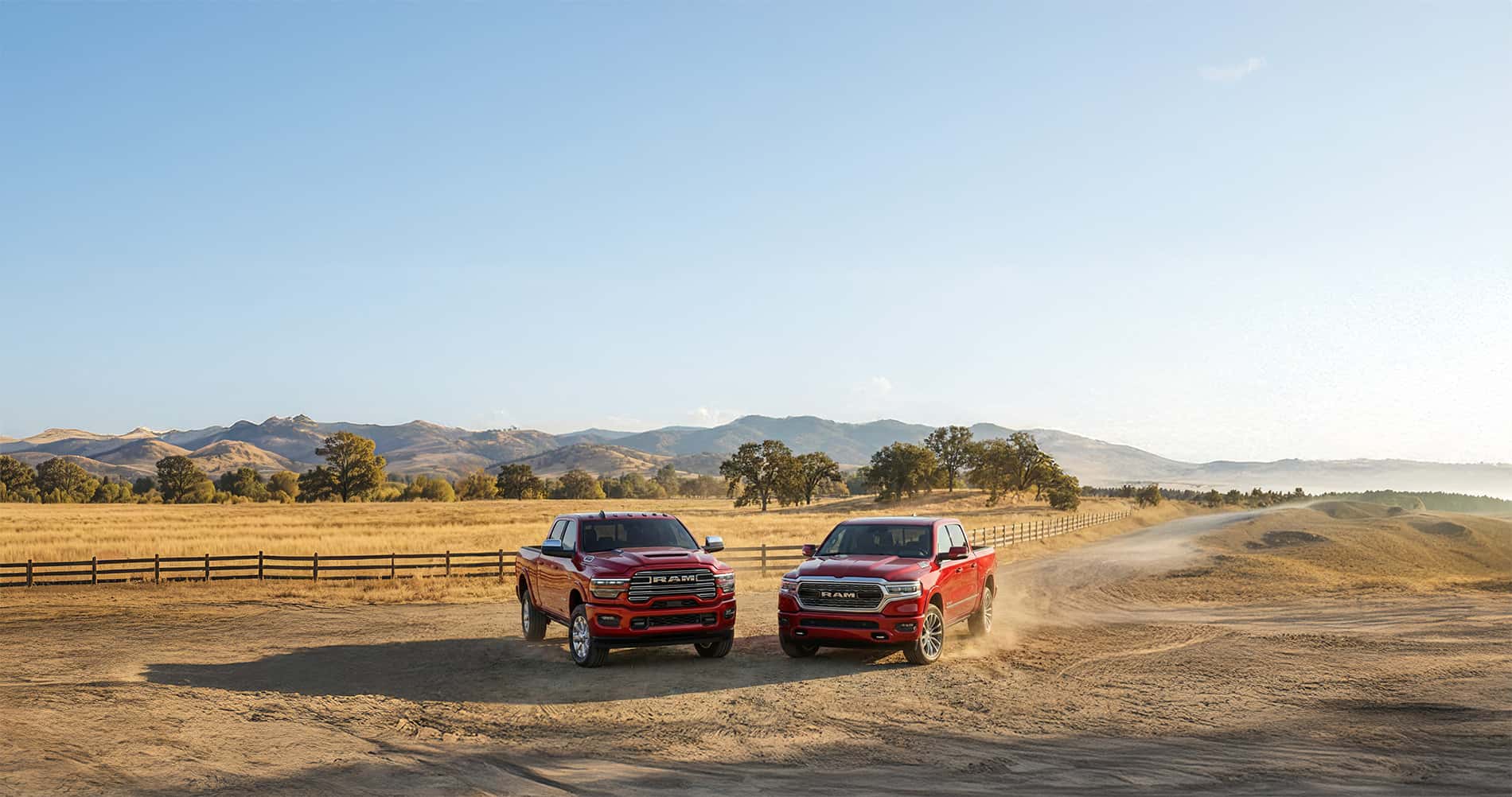
Choosing between the 2026 Ram 1500 and Ram 2500 isn’t always simple — especially when both trucks offer strong capability, modern technology, and the kind of comfort that makes them easy to live with every day.
This guide breaks everything down in a way that’s straightforward and practical, helping shoppers understand not just the numbers, but what those differences mean in real‑world driving.
All sections include a clear table with exact figures, followed by plain‑language explanations that highlight why those details matter for daily use, weekend towing, or heavy‑duty work — and the unique strengths each model brings to different types of drivers.
There is also a breakdown of Which Truck Should You Choose? & Frequently Asked Questions section to help answer any remaining questions.
The 2026 Ram 1500 is built for drivers who want a refined, comfortable truck that still delivers real capability.
Its smooth ride, quiet cabin, and upscale interior materials make it one of the most pleasant full‑size pickups to live with day‑to‑day. Rear‑seat space is among the best in the class, giving passengers plenty of room to stretch out on longer drives.
Ram’s latest technology — including large touchscreen options, premium audio, and available hands‑free driving assistance — helps the 1500 feel modern and intuitive without overwhelming the driver.
Multiple engine choices, from the efficient Pentastar V‑6 to the high‑output Hurricane I‑6, give shoppers flexibility in power and performance.
While it can tow and haul confidently, the Ram 1500 is ultimately designed around comfort, drivability, and everyday practicality.
It strikes the ideal balance between capability and refinement.
The 2026 Ram 2500 takes a heavy‑duty approach, prioritizing strength, durability, and long‑term capability.
With its reinforced frame, powerful 6.4L HEMI V‑8, and available high‑output Cummins diesel, the 2500 is engineered for serious towing and hauling — the kind of work that involves equipment trailers, large boats, or commercial loads.
Inside, the Ram 2500 blends rugged functionality with premium comfort. Many of the same tech features found in the 1500 are available here, including a 12‑inch touchscreen, digital cluster, and advanced camera systems designed specifically for towing.
The cabin remains spacious and well‑built, though its layout leans more toward utility than luxury.
For drivers who regularly push their truck to its limits — whether on job sites, long highway hauls, or off‑road terrain — the Ram 2500 offers the confidence and durability that only a heavy‑duty platform can provide.
It’s the clear choice when maximum capability matters most.
| Trim | 2026 Ram 1500 Starting MSRP* (Example Configuration) |
2026 Ram 2500 Starting MSRP* (Example Configuration) |
|---|---|---|
| Tradesman | $41,575 Quad Cab 6′ 4″ Bed 4×2 |
$46,485 Regular Cab 8′ 0″ Bed 4×2 $53,035 |
| Big Horn | $52,980 Crew Cab 5′ 7″ Bed 4×4 |
$56,785 Crew Cab 6′ 4″ Bed 4×4 |
| Warlock | $52,415 Crew Cab 5′ 7″ Bed 4×4 |
$56,030 Crew Cab 6′ 4″ Bed 4×4 |
| Laramie | $64,430 Crew Cab 5′ 7″ Bed 4×4 |
$64,870 Crew Cab 6′ 4″ Bed 4×4 |
| Rebel | $64,995 Crew Cab 5′ 7″ Bed 4×4 |
$69,385 Crew Cab 6′ 4″ Bed 4×4 |
| RHO | $73,045 Crew Cab 5′ 7″ Bed 4×4 |
— |
| Limited | $75,955 Crew Cab 5′ 7″ Bed 4×4 |
$77,170 Crew Cab 6′ 4″ Bed 4×4 |
| Limited Longhorn | $76,450 Crew Cab 5′ 7″ Bed 4×4 |
$77,170 Crew Cab 6′ 4″ Bed 4×4 |
| Tungsten | $88,350 Crew Cab 5′ 7″ Bed 4×4 |
— |
| Black Express | — |
$52,600 Crew Cab 6′ 4″ Bed 4×2 $55,530 |
| Power Wagon | — | $72,880 Crew Cab 6′ 4″ Bed 4×4 |
The pricing breakdown for the 2026 Ram 1500 vs 2500 highlights how these two trucks serve very different needs for drivers across places like Elk Grove and Modesto. The Ram 1500 lineup starts at a more accessible price point, especially in trims like the Tradesman and Big Horn, making it a strong fit for everyday commuting, light hauling, and family use. Its lower starting MSRPs reflect a half‑ton truck designed for versatility without the added cost of heavy‑duty capability.
By contrast, the Ram 2500 trims consistently sit several thousand dollars higher, which makes sense once you consider what buyers get in return: stronger frames, bigger beds, and configurations built to handle demanding workloads. For shoppers comparing the Ram 1500 vs Ram 2500 for towing, job‑site use, or long‑term durability, the added investment in the 2500 often pays off in real‑world capability.
Higher‑end trims like Limited and Limited Longhorn show how close the pricing becomes when both models are equipped with premium features. Meanwhile, specialty trims such as the Rebel or Power Wagon cater to drivers in areas like Sacramento or Roseville who want off‑road confidence straight from the factory.
Overall, the table makes it clear that choosing between the Ram 1500 and Ram 2500 isn’t just about price — it’s about matching the truck to your lifestyle, workload, and long‑term plans.
| Engine | Horsepower & Torque | Drive | Max Towing (Lb)* | Max Payload (Lb)* |
|---|---|---|---|---|
| 2026 Ram 1500 | ||||
| 3.6L Pentastar V-6 eTorque | 305 HP / 269 Lb-Ft | 4×2 or 4×4 | 8,130 | 2,360 |
| 5.7L HEMI V-8 eTorque | 395 HP / 410 Lb-Ft | 4×2 or 4×4 | 11,320 | 1,650 |
| 3.0L Hurricane SO Twin Turbo I-6 | 420 HP / 469 Lb-Ft | 4×2 or 4×4 | 11,610 | 1,930 |
| 3.0L Hurricane HO Twin Turbo I-6 | 540 HP / 521 Lb-Ft | 4×4 | 10,000 | 1,490 | 2026 Ram 2500 |
| 6.4L HEMI V-8 | 405 HP / 429 Lb-Ft | 4×2 or 4×4 | 17,740 | 3,930 |
| 6.7L Cummins HO Turbo Diesel I-6 | 430 HP / 1,075 Lb-Ft | 4×2 or 4×4 | 20,000 | 3,600 |
The engine lineup in the 2026 Ram 1500 vs 2500 chart shows just how differently these two trucks are built to perform. The Ram 1500 offers four gas‑powered options that balance power with daily drivability, making it a strong fit for commuters, weekend towers, and families across places like Folsom or Galt. Even the entry‑level Pentastar V‑6 delivers enough strength for light trailers or home‑improvement runs, while the Hurricane engines push the half‑ton into genuinely quick, confident territory. For many shoppers comparing the Ram 1500 vs Ram 2500, this blend of performance and comfort is exactly what they need.
The Ram 2500 engines, however, operate on an entirely different level. Its 6.4L HEMI V‑8 and the legendary 6.7L Cummins diesel are designed for heavy lifting — the kind of work that involves equipment trailers, large boats, or job‑site loads. With towing capacities reaching up to 20,000 pounds, the 2500 is built for drivers in places like Stockton who rely on their truck as a true work tool, not just a daily driver.
Overall, the table highlights a simple truth: the Ram 1500 prioritizes versatility and comfort, while the Ram 2500 is engineered for maximum strength and long‑term durability.
Comparing the most common configuration of each model: Ram 1500: Crew Cab 5′ 7″ Bed vs Ram 2500: Crew Cab 6′ 4″ Bed
| Exterior Dimension | 2026 Ram 1500 Crew Cab 5′ 7″ |
2026 Ram 2500 Crew Cab 6′ 4″ |
|---|---|---|
| Overall Length | 232.9″ | 238.8″ |
| Overall Width (w/ Mirrors) | 82.1″ | 83.5″ |
| Overall Height | 77.6″ | 80.2″ |
| Wheelbase | 144.5″ | 149.0″ |
| Ground Clearance | 8.7″ | 11.1″ |
| Approach Angle | 20.4° | 21.0° |
| Departure Angle | 23.1° | 22.6° |
| Breakover Angle | 19.0° | 18.2° |
Drivers comparing the Ram 1500 vs 2500 will notice right away that these trucks are built with different priorities in mind. The Ram 1500 keeps a slightly smaller footprint, which makes it easier to maneuver in tighter areas around places like Roseville or Elk Grove. Its lower height and shorter wheelbase also help it feel more agile in everyday driving, especially when navigating parking lots or suburban streets.
The Ram 2500, on the other hand, carries the extra size you’d expect from a heavy‑duty truck. The longer wheelbase and taller stance translate into greater stability when towing or hauling, and the increased ground clearance gives it an advantage on uneven job‑site terrain or rural roads outside Sacramento. Even the modest differences in approach and departure angles matter when climbing steep driveways, backing trailers, or tackling mild off‑road conditions.
What these measurements really show is how each model fits into real life. The Ram 1500 is sized for comfort, convenience, and daily usability, while the Ram 2500 is engineered for capability first. For shoppers weighing the Ram 1500 vs Ram 2500 for work, recreation, or family use, these exterior dimensions help clarify which truck aligns best with their routine and the environments they drive in.
Comparing the most common configuration of each model: Ram 1500: Crew Cab 5′ 7″ Bed vs Ram 2500: Crew Cab 6′ 4″ Bed
| Bed Dimension | 2026 Ram 1500 5′ 7″ Bed |
2026 Ram 2500 6′ 4″ Bed |
|---|---|---|
| Bed Length | 67.4″ | 76.3″ |
| Bed Width (Between Wheelhouses) | 51.0″ | 51.0″ |
| Bed Width (Max) | 66.4″ | 66.9″ |
| Bed Depth | 21.5″ | 20.2″ |
| Cargo Volume | 53.9 Cu Ft | 57.5 Cu Ft |
Bed size plays a bigger role in daily life than most shoppers expect, especially when comparing the Ram 1500 vs 2500 for work, home projects, or weekend hauling. The Ram 1500’s 5′ 7″ bed is designed for versatility — long enough for landscaping supplies, camping gear, or a couple of dirt bikes, yet still easy to maneuver in tighter areas around places like Rancho Cordova or Lodi. Its slightly deeper bed also helps keep cargo secure, which is useful when loading loose materials or stacking items vertically.
The Ram 2500’s 6′ 4″ bed shifts the focus toward capability. That extra length translates into noticeably more usable floor space, making it easier to carry construction lumber, larger equipment, or bulkier loads without relying on a bed extender. Even though the depth is a bit shallower, the overall cargo volume is higher, which matters for drivers who routinely haul heavier or oversized items. For many shoppers in Sacramento or Stockton who depend on their truck for demanding tasks, this added room can be a deciding factor.
What stands out most is how each bed configuration aligns with real‑world needs. The Ram 1500 prioritizes convenience and everyday practicality, while the Ram 2500 offers the expanded space that supports serious work. For anyone weighing the Ram 1500 vs Ram 2500, understanding these differences helps clarify which truck will fit their lifestyle best.
Comparing the most common configuration of each model: Ram 1500: Crew Cab 5′ 7″ Bed vs Ram 2500: Crew Cab 6′ 4″ Bed
| Interior Dimension | 2026 Ram 1500 Crew Cab |
2026 Ram 2500 Crew Cab |
|---|---|---|
| Seating Capacity | 6 | 6 |
| Passenger Volume | 132 Cu Ft | 125 Cu Ft |
| Headroom (Front) | 40.9″ | 40.9″ |
| Headroom (Rear) | 39.8″ | 39.8″ |
| Legroom (Front) | 40.9″ | 40.9″ |
| Legroom (Rear) | 45.2″ | 40.2″ |
| Shoulder Room (Front) | 66.0″ | 65.9″ |
| Shoulder Room (Rear) | 65.7″ | 65.6″ |
| Hip Room (Front) | 63.4″ | 62.9″ |
| Hip Room (Rear) | 63.4″ | 62.7″ |
| Rear Under‑Seat Storage | Available | Available |
Interior space is one of the most important comfort factors for truck shoppers, and the differences between the Ram 1500 vs 2500 become clearer once you look at how each cabin is designed to support everyday life. Both models seat up to six passengers, but the Ram 1500 offers noticeably more total passenger volume. That extra space translates into a roomier feel on longer drives, especially for families or commuters traveling between places like Elk Grove and Sacramento.
Rear legroom is where the gap really stands out. The Ram 1500 provides over five additional inches compared to the Ram 2500, giving adults and taller passengers far more stretch‑out space. For anyone regularly carrying coworkers, kids, or full crews, that difference can make daily travel more comfortable and less cramped. The Ram 2500 still offers generous dimensions, but its cabin is shaped around heavy‑duty capability, which naturally shifts some interior space toward structural strength and towing hardware.
Headroom, shoulder room, and hip room remain nearly identical between the two trucks, so both feel wide and accommodating in the front and rear rows. Shared features like under‑seat storage also help keep the cabin organized, whether you’re hauling tools or weekend gear around Stockton or Roseville.
For shoppers comparing the Ram 1500 vs Ram 2500, the takeaway is simple: the 1500 prioritizes passenger comfort, while the 2500 balances comfort with the demands of heavy‑duty performance.
Not all features listed are standard equipped – some features may be optional or available through packages or certain trim levels.
| Interior & Technology Feature | 2026 Ram 1500 | 2026 Ram 2500 |
|---|---|---|
| Main Touchscreen Size | 14.5″ Uconnect 5 | 12″ Uconnect 5 |
| Passenger Interactive Display | 10.25″ Passenger Screen | 10.25″ Passenger Screen |
| Digital Instrument Cluster | 12″ Digital Cluster | 12″ Digital Cluster |
| Head-Up Display | Available | Available |
| Audio System | 23-Speaker Klipsch Premium Audio | 17-Speaker Harman Kardon 900-Watt Audio |
| Wireless Charging | Dual Wireless Charging Pads | Wireless Charging |
| Smartphone Integration | Wireless Apple CarPlay & Android Auto | Wireless Apple CarPlay & Android Auto |
| Front Seat Features | Available 24-Way Power • Massage • Heated & Ventilated | Available Leather • Heated & Ventilated |
| Rear Seat Features | Heated Rear Seats | Reclining Rear Seats (Mega Cab) • Heated Rear Seats |
| Interior Storage | In-Floor Bins • Under-Seat Storage • Large Center Console | Rear In-Floor Ram Bins • Fold-Flat Load Floor • Rear Cubby Bin |
| Connectivity | Wi-Fi Hotspot • Alexa Built-In • Navigation | Wi-Fi Hotspot • Navigation • Trailer Camera Views |
The interior technology in today’s trucks has become just as important as towing or payload, and the differences between the Ram 1500 vs 2500 show how each model is tailored to a specific kind of driver. The Ram 1500 leans heavily into a premium, almost luxury‑like experience, especially with its available 14.5‑inch touchscreen and the impressive 23‑speaker Klipsch audio system. For daily commuters or families in places like Elk Grove or Roseville, these upgrades make long drives feel more comfortable and connected.
The Ram 2500 offers many of the same core features — including the passenger display, digital cluster, and wireless smartphone integration — but its technology is more work‑focused. Options like trailer camera views and the fold‑flat load floor speak directly to drivers who rely on their truck for job‑site tasks or heavy towing. Even the audio system, while still premium, is tuned toward durability and clarity rather than the immersive sound experience emphasized in the 1500.
Both trucks deliver modern conveniences such as wireless charging, heated seating, and smart storage solutions, but the way these features are packaged reflects their intended roles. For shoppers comparing the Ram 1500 vs Ram 2500 around Sacramento or Stockton, the takeaway is simple: the 1500 prioritizes comfort and upscale tech, while the 2500 blends convenience with capability for those who need a true heavy‑duty interior.
Not all features listed are standard equipped – some features may be optional or available through packages or certain trim levels.
| Safety / Driver Aid | 2026 Ram 1500 | 2026 Ram 2500 |
|---|---|---|
| Forward Collision Warning | Full-Speed Forward Collision Warning Plus | Forward Collision Warning |
| Automatic Emergency Braking | Pedestrian & Cyclist Emergency Braking | Automatic Emergency Braking |
| Adaptive Cruise Control | Adaptive Cruise Control with Stop & Go | Adaptive Cruise Control |
| Lane Keeping / Lane Centering | Active Lane Management System | Lane Keep Assist |
| Hands-Free Driving | Hands-Free Active Driving Assist | Not Offered |
| Parking Assistance | Park-Sense Automated Parking System | Front & Rear Park Assist |
| Blind-Spot Monitoring | Blind Spot Monitoring with Trailer Detection | Blind-Spot Monitoring |
| Rear Cross-Path Detection | Rear Cross-Path Detection | Rear Cross-Path Detection |
| Surround View Camera | 360° Surround View Camera | 360° Surround View Camera |
| Trailer Surround View | Trailer Surround View Camera | 360° Trailer Surround View Camera |
| Digital Rearview Mirror | Digital Rearview Mirror with Tow Mode | Digital Rearview Mirror with Side Cameras |
| Evasive Steering Assist | Available | Not Listed |
| Intersection Collision Assist | Available | Not Listed |
| Drowsy Driver Detection | Available | Not Listed |
| Traffic Sign Recognition | Available | Not Listed |
| Airbags | Advanced Multistage Front • Side-Curtain • Front-Seat Side | Advanced Multistage Front • Side-Curtain • Front-Seat Side |
| Stability Control | Electronic Stability Control | Electronic Stability Control |
| Trailer Tow Safety | Trailer Light Check • Trailer Reverse Steering Control | Trailer Tow Pages • Trailer Tire Pressure Monitoring |
Safety technology has become one of the biggest deciding factors for truck shoppers, and the differences between the Ram 1500 vs 2500 show how each model is designed for a specific kind of driver. The Ram 1500 leans into advanced driver assistance, offering features like hands‑free driving, pedestrian and cyclist emergency braking, and lane‑centering support. For drivers navigating busy areas such as Sacramento or Roseville, these systems can make daily commuting feel more relaxed and secure, especially in stop‑and‑go traffic.
The Ram 2500 focuses more on capability‑driven safety. While it offers many of the same core protections — including blind‑spot monitoring, rear cross‑path detection, and a 360‑degree camera — its feature set is tailored toward towing and heavy‑duty use. Tools like Trailer Tow Pages and trailer tire pressure monitoring are especially valuable for owners who regularly haul equipment or large trailers around Stockton or beyond. These systems help reduce stress by giving drivers clearer visibility and better control when managing heavier loads.
Both trucks provide strong foundational safety with advanced airbags and stability control, but the real‑world takeaway is simple: the Ram 1500 prioritizes driver comfort and modern assistance features, while the Ram 2500 emphasizes confidence and control under demanding conditions. For anyone comparing the Ram 1500 vs Ram 2500, understanding how these safety systems align with everyday driving needs can make choosing the right truck much easier.
Choosing between the Ram 1500 vs 2500 ultimately comes down to how you plan to use your truck day‑to‑day.
The Ram 1500 is the right fit for drivers who want a smooth, comfortable ride with plenty of capability for weekend towing, home projects, and family travel. Its refined interior, advanced technology, and easier maneuverability make it especially appealing for those navigating suburban areas around Elk Grove or Roseville.
The Ram 2500, on the other hand, is built for serious work. Its stronger frame, higher towing limits, and heavy‑duty components make it the better choice for drivers who regularly haul equipment, tow large trailers, or spend time on job sites. If your routine includes long stretches of highway towing or rugged conditions outside Sacramento or Stockton, the 2500’s added strength and stability will pay off.
Both trucks deliver impressive comfort, modern tech, and the unmistakable Ram driving experience. The key is matching the truck to your lifestyle: choose the Ram 1500 for everyday versatility and comfort, or step up to the Ram 2500 when maximum capability and long‑term durability matter most.
At Elk Grove CDJR, we know you have options when shopping for a new truck — but our customers tell us the experience here simply feels different.
As a locally rooted dealership, we take pride in serving drivers from Elk Grove, Sacramento, Galt, and the surrounding communities with the kind of personal attention big-box stores can’t match. When you’re comparing the Ram 1500 vs 2500, our team doesn’t just recite specs; we listen to how you actually use your truck and guide you toward the configuration that fits your life, your work, and your budget.
Our inventory is one of the most comprehensive in the region, which means you can explore multiple trims, bed lengths, and engine options side by side — including hard‑to‑find models and heavy‑duty builds. And because we believe transparency builds trust, we walk you through pricing, trade‑in values, and available incentives with zero pressure.
Most importantly, we stand behind every truck we sell. From expert service technicians to a parts department that understands real‑world truck ownership, we’re here long after the keys are in your hand. That’s why so many drivers return to Elk Grove CDJR year after year: they know we’re committed to earning their business, not just completing a sale.
DISCLAIMERS:
*MSRP excludes destination charges, taxes, title, registration, and optional equipment. Dealer pricing may vary. Pricing is subject to change without notice. See dealer for details.
*Towing capacity shown is maximum when properly equipped. Towing capability varies based on vehicle configuration, cargo, passengers, accessories, and trailer equipment. Always follow all towing guidelines in the owner’s manual.
*Payload figures are maximum ratings and vary based on vehicle configuration and installed equipment. Payload includes the weight of occupants, cargo, and optional equipment. Do not exceed GVWR or GAWR limits.